| BesidesWork |  |
Home / BesidesWork /
|
|
|
 |
| Adventure & Sports |
| A Venture of Adventure: How Depinder Chaudhry Built a Successful Venture Around His Passion for the Mountains |
| Author : | thedesk |
| Institute : | |
| Posting Date : | 30/08/10 |


|
|
|
| Total 21 vote(s). |  | |
|
|
|
|
|
Life and times of Depinder Chaudhry: In Conversation wirth 6bridges on how he pursued his passion for mountains and made a successful business venture of trekking in the far-away Himalayas and adventure travel.
|
|
|
The story of Depinder Chaudhry has significant relevance for most professionals, perhaps more than many others who set out to pursue their passions. And why? Because his story could be that of any one of us. His journey could be similar to ours. His dilemma is much like that of a professional who’s been planning and plotting his flight towards the orbit of his passions. The difference is that Depi, as he is popularly known, actually rode away successfully from a corporate career and into the Himalayas , pursuing his passion for trekking and adventure-travel in the mountains.
He wrote a book on trekking in the Himalayas, started an organization that takes people on an adventure trail across the Himalayas and has also created a successful business model out of his passion, which is indeed an important context of learning for all professionals who look at pursuing passion full-time.
Everything did not begin well though. When Depi left his corporate career and started Real Adventures in 2002, things didn’t fall into place at the start. He failed. So, he went back to a corporate job. But, only for a brief while. The call of his passion was too compelling to stay away for long. He returned to his venture once again. And it was his second coming into the venture, the time he got up after being knocked down like a good boxer, carrying with him the lessons of why it didn’t take off the first time, that he could pursue it with a better business sense and a more practical approach. Today, his life is centered on his passion and he enjoys every moment of it. As he told us, “It is harder work than the corporate world but then you are working towards a dream and a passion and you enjoy doing it.”
Depi has been exploring different parts of the Himalayas for many years, and has sketched the maps on the website. The love for adventure that began during his school treks has enabled him to explore other areas of outdoor activity as well. He has taken people to do rafting and cycle treks in other parts of India . The successful pursuit of his passion has also made Depi look beyond immediate goals. At the end of the day, I believe that it’s your personal satisfaction in your work that matters, more than the millions of dollars, he says.
He has been working on a project called ‘Ashraya’ (means ‘shelter’) for sometime. Ashraya has been a dream project of Depi. It was conceived as a green home in a spectacular surrounding, overlooking the Ganga. Rooms are large and the baths are as big as bedrooms. It has been self architected, designed and executed, and made up of natural stones virtually without any cement and steel. For lunch and dinner here, you are offered the local village cuisine. Depi’s website mentions that “It is so quiet that you can hear your own heart beat. You get a feel of the day-to-day life of a village in the Himalayas.”
Depi goes on a 110 day trek across the Great Himalayan Trail every year. The Great Himalayan Trail is one of the grand long distance treks where he takes groups or professionals on an adventurous trail across these massive mountains. Depi understands the practical problems of people actual making themselves available for a 110 day trek in the Himalayas, away from home and work. Therefore, he has designed the trail in a manner that will suit professionals wanting to walk different segments of it and also complete a trek of tremendous adventure and accomplishment.
It is this earthy, pragmatic quality of his thinking that has enabled Depinder to tie his passion with a sense of sustaining it through hard-nosed business sense. He is at ease with himself, upbeat about his passion, constantly looks to innovate and is clear about his business plans. In this interview with 6bridges, Depi talks about his growing up, his passion, his successes and his setbacks, his plans for Real Adventures and the manner in which he looks to stay rooted to his passion amidst growing business opportunities and the temptations of expansion.
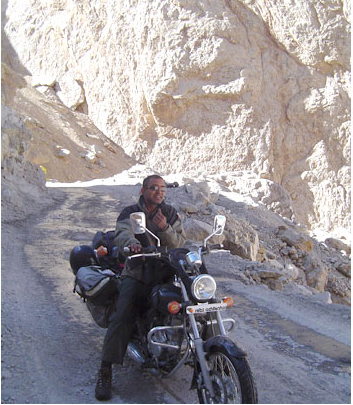
Interview:
6bridges: Tell us about your story - and how you transitioned from a corporate career to this venture?
Depinder Singh: Let me start the story staring with my childhood. Born into a family with a middle class background, my father was an ex army officer and had taken up a job as a secretary with the Haryana state sainik board after retirement. My mother was an English teacher. The rest of the family had, over generations, gone to the Sanawar Public School. That’s how they were keen to send me there as well though they could barely afford to do so then.
I was doing fairly well in academics, was a mischievous guy active in sports and other things as well. Somewhere in class IX the school provided an opportunity to do a mountaineering course from HMI Darjeeling during the winter break. At Sanawar we loved the camps and hikes we used to go for every year and the overnight hikes on weekends. We had a concept where you could get your rations, utensils, rucksacks issued in school; you could go on an overnight hike, cook your own food and come back the next evening. You could do it on most weekends in school. That concept has now stopped over the recent years, I don’t know why.
We used to love those hikes and the annual camps we went for with teachers. We would sit down on a Saturday afternoon with the teachers and make our plans and budget. We used to plan about how to get to a place. We would think of getting there even if we had to sit on the back of a truck and had to spend the night sleeping at a village home or on the roof of a dhaba. We would do that just to make sure we could go to the places that were far off. That’s how the interest began and then I ended up doing this mountaineering course.
The passion still remained inside but it was dormant, and pressures from parents saying that I must do engineering and things like that dominated everything. In those days, even if you did engineering you still had to wait for a job. So I ended up going to this engineering college straight from Sanawar. I didn’t really fit into that world and wanted to run away from there. I ran away home six times in the first semester, saying that studies are very difficult and I couldn’t do them.
My mother turned around and said, ‘Son it doesn’t make a difference if you take four or five or years. Just go ahead and do it. That’s how I ended up studying for a bit in my first semester and pleaded with my teachers to allow me to sit for my exams. I figured out when the results arrived that although I had missed most of my classes, and barely got any time to study, I managed to clear all my papers, compared to a few other guys who were slogging it out throughout the semester.
Then it struck me that I hadn’t lost it and could finish the course in four years. That’s how I ended up studying and at the end of the course I had topped all the engineering colleges of Mysore University. There were 14 of them in my branch, and I even got a gold medal. My academics had been going like a seesaw - I had 123 out of 125 in class X in my mathematics and then in classes XI and XII, I had a girlfriend and like a typical teenager didn’t study. I got 60% in sciences and that’s how I ended up in a donation college.
6bridges: What happened after the course? Where did you go?
Depinder: I was dying to finish my course after which I picked up a job with Tata steel at Jamshedpur as a management trainee. In those days Tata Steel had different categories. One was Tata Administrative Services which came through central recruitment and then there were these graduate engineers who were picked up by the IITs. Then they had another category called management trainees. Mr Modi interviewed people personally and hired about 5-7 of them every year in that category. It was a stream parallel to the Tata Administrative Services and was jokingly called Modi Administrative Services.
I ended up in that cadre. I remember my interviews being crazy. I met one of my friend’s sisters who was back from London after a course in hair and salon. I asked her to experiment on me as a guinea pig! The hair was cut on the sides, some hair rose in the centre and I ended up looking like a punk going for my interview! Mr Modi’s style of interviewing was also totally different. He fiddled around with his pen as I sat with him in his hotel room.
We had an informal interview where he asked me questions ranging from Hinduism and girlfriends. To the former I said I didn’t know much, and to the latter, I said I didn’t have any at that point in time! Though it was a casual conversation, I got selected and was hired. In fact he didn’t even give me a formal appointment letter, he just scribbled on a piece of paper after the interview and told me to report to the SPS. He said, “I want to see you at the football match. Please come and sit next to me.” This was his way of trying to gauge how I will figure it out where the SPS was, how to get an appointment letter, where the football ground was, how to find him and come and sit there. He wanted to find out how resourceful and smart I was. The batch had already started on 1st January; it was the 5th January on the day of interview. He wanted to see me by 17th January.
I went to Calcutta and figured out who SPS was. It was the initials of the principal executive officer. I told him I had come to join Tatas, and asked where to go. He said Jamshedpur where I was to meet one Mr Mattoo. So the process began, but after a month in the company, people started asking me if I had joined the right company since I didn’t have any appointment letter. Sometime later I was given my appointment letter.
In the company my training was shortened, and I was soon appointed as an executive assistant to one of the senior people - Ashok Pandit. I had to work on balance sheets and financial numbers. So I thought of going out and getting myself a finance qualification so to understand the subject better. I appeared for the ICFAI exams. I had joined Tata Steel in 1991 and so, after 5 years, I went to Hyderabad to do my MBA in 1996.
Along with MBA I also did a diploma in business finance as well. I had already married a colleague who was with me at Tata Steel. When I joined the MBA program we had had a daughter followed by twin girls!
6bridges: How was your experience with the program?
Depinder: It was a tough juggle trying to handle the kids, doing the MBA and also doing a diploma in business finance alongside it. In my first term, I did okay with my MBA papers but did badly in the Business finance program. I moved out of home for 4-5 months, took up another apartment and would go and see the family only for dinner. It paid off and I did well in my second term. I cleared all my backlogs and even managed the highest marks in India in a couple of papers as well.
It’s just a matter of determination and whether you’re willing to believe in your self. So I went back to Tata Steel after completing my program at ICFAI on study leave. I found myself without much of a job, drinking coffees and shuttling between cabins.I left Tatas and joined a SAP consultancy firm. My work at Tata Steel was method improvement, value engineering, quality improvement, statistical tools etc. It was similar to what is now known as six-sigma now. At the SAP firm, they hired 9 of us, and we got our H1B1 visas. I was to fly to the US a week after the others. However all eight of them were given pink slips and I didn’t get on the plane at all. I dumped them and joined ZeeNext, which was a dot com that Subhash Chandra was planning to start in Dec 2000.
The objective at the portal was to get valuation and thus the brief I was given was ‘bada banao, bada banao’. Subhash Chandra had bought a 23% stake in a company called Aflabs, which makes ATM machines in Mumbai. Later the ATMs got replaced by Playwin terminals. Zee, I thought, began to have fingers in many pies. I left Zee and joined TSI Bull, a French company which was into selling hardware. I was hired by that company to help start their practice in ERP and CRM. I started their practice in SAP and Siebel in Bangalore.
In the meanwhile my wife also quit her job to keep up with my pace. I was to join Wipro in Chennai, in the area of acquisitions, but then my wife got a job in GE Capital in Gurgaon. She was really keen on taking up this job. I said fine, all these years you have been quitting your job to join me and for a change, I decided to quit my job and think about what I should do with my life. In these years that I was with a corporate, I would go take holidays and go off on a trek once in a while. Even with Tata Steel I used to go off on treks. I remember we were on a trek with the legendary Bachendri Pal (first Indian woman to climb Mt Everest) when we were struck by an earthquake in Uttarkashi.
We had to abandon that expedition and started doing relief work - helping stranded people, picking up dead bodies. And then there was a newspaper flash saying ‘Bachendri Pal and team missing’! My parents got worried and one fine day, I showed up home and they said, “Well you’re still alive! The newspapers said you were missing.” Those days communication was very poor. We didn’t have mobiles and even for making a telephone call, one had to stand in a queue at a booth.
So once we moved to Gurgaon, I realized that I would like to do something I liked and not regret later about missed opportunities. That’s how I got into this line. I started trekking around and started a small company. However I was mistaken on my marketing strategy.
6bridges: You started off with a mistake. What was the mistake?
Depinder: The first year I used all money to start a website, brochures and various other things, but didn’t get any guests. There were a few things. One, I could have been perceived as this corporate executive who has left his job and now wants to walk around in the mountains. Indians are not the best trekkers either. International trekkers have their alliances in place beforehand and they don’t jump from one person to another without reason, or something drastic. Minor hiccups are acceptable though. So I didn’t get any business and ended up picking up a job for another year and a half after that in 2004.
I ended up joining CII, trying to help them restructure internally. At the end of the year, I submitted my findings to Tarun Das. However I knew that I couldn’t do a sedentary job. I realized there will be ups and downs in what I had set out to do, and I needed to stick through it and learn from past mistakes. So I went back to trekking.
My strategy was clear this time. I would walk the mountains and come out with a guide book, which is impressive enough, which would give me some kind of credibility. I wouldn’t keep my portfolio as only trekking but have a business model that is broader and not very cyclical. For instance, if trekking didn’t happen in the winter months, I would do rafting in Rishikesh in those months. Or maybe cycling in Rajasthan in the winter months. This would bring me a constant stream of revenue.
Then there were friends of mine who were in this line for quite sometime and had been running heritage properties in Rajasthan. Each time they would be in Delhi, they would take me along to a travel agent, introduce me and tell them, ‘He’s just like a brother and a fabulous guy. You must work with him.” That’s how I got to know these agents. But till date I haven’t got any business from these agents because I also haven’t really asked them for any.
6bridges: So what is your setup like?
Depinder: I run a very small boutique kind of set-up. I don’t want to conquer the world. I like to travel and go out on my own to these places and guide people myself. If my organization is going to be so big that I would have to sit behind the desk, I would have lost the purpose. That’s the kind of set up we would like to have. We don’t market ourselves.
Business comes through word-of-mouth, so we have known people. That’s why we don’t have chaos. Even at the rafting camp we have small setup. I own the land. I bought it myself - it’s a private beach kind of a thing on the banks of the Ganga, unlike some of the others who have leased land. Now I am trying to introduce some of the concepts that I learnt during my life. So I am building a house which is without cement and steel. I am the architect, designer and site engineer, site supervisor - all rolled into one. When I am not there the work comes to standstill. I am trying to generate my own electricity by putting up my own mini micro hydro turbine I have designed myself. So that keeps me going and is very satisfying.
6bridges: What was your wife’s reaction to starting this venture again after CII?
Depinder: My wife and my children have been supportive. That’s because they come from a certain background and do not have a conventional thought process towards these things. That’s different from how my parents think who have been a little shaky about the whole thing and wonder even now whether I am doing the right thing. They even remind me that I have three daughters to marry off etc! My wife has been encouraging and since she’s been working, I could afford to take the risk and move ahead. There are a lot of people who come and compliment me on what I am doing, but I know that I can do it because of the support of my wife.
6bridges: Have the close friends been supportive?
Depinder: Close friends have been very supportive. In fact they go out of their way to try and help me. There are also those friends who associated with you because you were a senior executive in the corporate world who moved around with a fancy car etc. Those people who decide who you are valued by the car you drive and the society you live in - they get filtered out over time.
6bridges: The passion for trekking in the mountains was there. How did it get converted into the idea of adventure tourism? Did you think of other revenue models too?
Depinder: I thought let me walk around in the mountains and do these treks, and friends would contribute. So wherever I used to walk in these mountains, I found there were gaps and I felt there was a need for a good guide book with a map etc. Here I found the purpose of putting together a guide book.
I actually went and bought satellite images, for which I paid through my nose. I have tracked these trek routes through these satellite images as well. Plus I have made my own maps as well in the book. Most authors aren’t usually tech savvy, so I said let me be a step ahead and use technology to make my own maps and do a rating on all.
6bridges: what were the initial challenges you faced when set up Real Adventures?
Depinder: Challenges are simple. There are days when your bank balance is zero and you don’t know where your next rupee is going to come from. But you need to believe in yourself and stick through them - there will be ups and there will be downs.
It’s a kind of thing where there is no end to working on existing things. Take for instance your home where you keep changing/improving various things from time to time - like mattresses, curtains etc. similarly there is no end to buying Equipment or improving your camps etc. So financially, you could often be in a tight situation till you decide enough is enough and you decide to pull some out.
Here you do everything yourself. E.g., if you ask someone to make and modify a simple PowerPoint presentation to a guy with 2 yrs experience, he probably will think ‘oh its below my job standard to do this.’ But when you are on your own, and you do it for yourself, you take passion in doing it. You don’t mind doing all those things which in the corporate world seems like small petty jobs which you shouldn’t be doing at your level. And you enjoy doing all that.
My day at the house in Gurgaon starts as soon as I get out of bed and I am on my computer. My day ends at 10/11 in the night. It is harder work than the corporate world but then you are working towards a dream and a passion and you enjoy doing it.
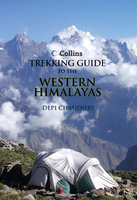
6bridges: How did the book help?
Depinder: Well, people start noticing your work and it helps build credibility. At the end of the day, I am still not going to be working on volumes but going to keep it a small-sized business. For instance, I am moving towards a fixed-day trek model. One keeps changing the model as one goes along.
Like this year, on the 14th July, I am off on a 110 day trek, which means I am going to walk all along the Greater Himalayas from close to Kashmir to the Nepal border. There’s another gentleman named Robin Bowstead who has done the trek from the Nepal border to the Sikkim border. He’s also taken roughly 105 days to do his part of the trek. He has come out with his book too. So when you put his book and mine together, it is perhaps the world’s longest high altitude trek. So, every year I will be running this trek which will be a 110 day trek and a cycling trek which will be in Uttarakhand and one endurance race each year as well. For the rest of the year, we do a bit of rafting and other things, including cycling in Rajasthan and Himachal.
6bridges: What’s the latest trek you went to?
Depinder: I have just come back from a cycling trip in Himachal. For this, there were 16 of them who had come with me - 8 couples - who were cycling around with me. Next year they are coming with me to Kerala to cycle around the place. The following year they are coming with me to Rajasthan for a cycling trip. You get your business through word of mouth, so you block your dates for those years.
6bridges: How did the thing take off after not getting business in the first year? Did the book turn it around?
Depinder: Not really the book, but I think the take off point was when I decided to do other things when not trekking. Rafting for instance. Rafting is something most of the corporates in Delhi end up going for. Given the fact that I came from a corporate background, and I had my engineering colleagues, MBA colleagues and my wife’s colleagues etc, personal contacts and word of mouth helped drive them to the rafting camp. I think that’s where the business started from.
The book didn’t drive up business as such. It’s just about come out and it’s still not available internationally. I think there are still some issues on selling it on Amazon. That impact might still happen later, in my opinion. In the meanwhile I am ready to come out with a book called the Great Himalayan Trail. And the third book which I have started work on is called ‘Thikanas on Cycles’. Its about cycling from one heritage property to another in Rajasthan. Thikanas stand for small kingdoms or fiefdoms.
6bridges: what is the business model for the venture and how has it evolved over time? How long did it take to become self-sustaining?
Depinder: I think the second time when I started off; it became self sustaining right from the beginning. There I wanted to be a little more cautious and I said lets not have any debts in the organization and we’ll be ok with having a slow growth. With the internal accruals we will keep improving our operations and systems. As a business model, we have been consistent and focused on getting known people. I have been careful on that. I said lets not be too greedy about money.
For example, in the midst of a family or groups of families, if I get youngsters from a telecom company who’ve just joined them they may just want to drink up, shout and scream and fool around. You can’t really have that when you have a family there. So I have to cut down business, just to satisfy clients or guests. This model has helped us in maintaining quality standards and in delivering the right services. Those people who are satisfied go back and tell other people, and that’s how it works. Word of mouth has been the tool that we’ve following.
6bridges; Have you had international travelers also, and what about corporate travelers?
Depinder: Corporate travelers mainly come to the rafting camps. I also do a bit of teambuilding for them, which is also our USP as compared to a lot of other guys. Coming from a corporate background I know the kind of teambuilding exercises that are required and undergone. We modify and rehash them and put it across.
As far as international business is concerned, it is mainly cycling and trekking. For example when I am taking someone on a trek like this GHT - though I put it up on the website, I do reference check to try and figure out whether they are capable of doing it or not. As a result of which my pricing is fairly high. If someone joins me on a 12 day trek he pays me USD $2400. I have broken up the journey into 8 parts. Some are 10 days, some 12 days, some 15, based on your exit points and entry points.
6bridges: So how is Real Adventures positioned?
Depinder: We offer a niche, small, customized, tailor made solutions for someone who wants to come and experience a bit of adventure.
6bridges: How do you think adventure tourism can grow in India? What is the potential?
Depinder: Yes, adventure tourism is growing in India and is definitely on the upswing. E.g., In the MTB (Desert trail) that we are running in November, we have 60 odd Indians registered to take part in that cycling competition. And these are youngsters. The younger lot is more health conscious and is willing to take on these events. I think that the exposure the youngsters are getting, even in call centers, by virtue of traveling abroad for 6 months or a year is helping them. They come back and think that this is what they should be doing more.
The other day I saw a girl in a nice trek cycle setting off to office. Things will change. Like in Delhi and Gurgaon, with the metro, you might see a lot of youngsters cycling to the metro station, parking the cycles, using the metro to get to office and then using the cycle after the metro ride to get back home. We have been doing the rafting thing with youngsters. When they come for rafting, they also trek across to nearby villages.
6bridges: You’ve covered Himachal and Rajasthan. Are you also looking at other places in India, like Kerala, to do this stuff?
Depinder: Its all client based. At the moment we are mainly north India centered. However, if there’s a client requirement to do a trek in Kerala, we will do a reconnaissance and work on that requirement. We have focused on the north in adventure tourism, since the north is more conducive to adventure due to the Himalayas.
6bridges: Alongside the hectic urban lifestyles that professionals have today, how do you recommend they create time for treks and lend a balance to their busy lives?
Depinder: It’s actually a mindset. If a person uses weekends and then takes an extra day off, or say take 12 holidays in a year clubbing it with a public holiday, then you can actually take off every month.
6bridges: Professionals debate over whether they should take up a passion fulltime or part-time. What is your take?
Depinder: A lot of people want to take it up full-time but they can’t since they are used to the salary coming in on the 1st of every month. The moment you take it away from them, the risk taking ability goes down. It also goes down with age, with time, with increase in family size and when people are dependent on your income. That really is the limiting factor in terms of people trying to take these decisions.
Down the road, people are getting married in India at a later age, and they are coming to a time when they can manage these options as well. You can get stuck by getting married early. It can happen in an Indian conventional system where parents insist upon getting you married early. As a single human being, you can take the financial decisions, go to a dhaba and rough it out.
6bridges; Do you suggest a person should follow a passion fulltime, if he can take a risk?
Depinder: I always tell my daughters that if you do what you like, you will always succeed in it. As long as your heart and your passion are there, you’ll figure out a way to do well there. If you’re half hearted and not fully committed, I’m afraid you’ll not succeed.
6bridges: How do you think working in a corporate set up has helped you in the pursuit of your passion as an entrepreneur?
Depinder: there are two sides to it. On the negative side, you become complacent in a corporate job and are used to the salary coming in on the 1st of every month. On the positive side, you come to know how business is done and generally become sharper. E.g., you go to the purchase department and come to know that you’re not getting the order because you feel someone is giving him a cut under the table. You start understanding the realities of life which teaches you when you set out on your own. And then you can choose what you want to become. You can bribe someone under the table or stay small but stay a clean, ethical organization. People do come around to appreciate when you’re ethical and professional. Between Tatas and other organizations which may not be as clean, you hear people saying the former is more professional.
6bridges: Given a chance, would you have started the venture earlier, without doing all those corporate jobs?
Depinder: At times these thoughts have come to my mind. Like, had I done this after I graduated from school, where would I have been? The answer is - I may have become a complete failure or someone with a limited thought process, not having seen the world, would not have been able to do half the things I am able to do now like create maps or use the GPS elevation maps or get on the Mac and do the illustrator, do CHM design, PageMaker, Photoshop etc.
I don’t think I would have been able to do half these things if I hadn’t gone through the corporate process. Even in terms of maintaining my accounts; today a boy from the village who’s passed the standard VIII, maintains all my accounts at the rafting camp. I have taught him how to do cash book, ledgers etc. Had I not been on the corporate side, I don’t think I would have been able to do these things and accounts would have been in a complete mess.
6bridges: So you suggest one gets a professional degree and corporate experience before starting out on one’s own?
Depinder: Yes. There was a colleague of mine who joined me last year. He came through a reference of a junior from school. He came with a clear objective: he said, “I want to learn this work because I want to start my own company.” I said I was happy he admitted that openly. I set about teaching him how to go about it because there is enough space for everyone to grow this business in this country.
6bridges: You have broken up the Great Himalayan Trail into segments. Tell us whether women or older people can do these treks? You mentioned about grades in your website. What are these grades, and how do they translate into who can do what kind of trek?
Depinder: It’s a subjective thing. What is difficult for someone may be easier for somebody else. It’s more in the mind. I’ll give you an example. There were a bunch of 55 year olds - three people whose birthdays we celebrated on this cycling trip. And believe me; they were cycling much faster than I could cycle. So it depends on how fit you are and what state you have been keeping yourself in. Based on that, each person has to decide what is difficult and what is not for them. I can only give you a generic standard of what would be applicable to a larger percentage of population.
And that thing about breaking up the 110 day trek, it eases up the plans of people since the option of taking a break for 110 days or a gap year is not viewed very well in India. That’s why I say that if you walk one leg every year, you’d have walked the entire Himalayas in 8 years.
6bridges: You’ve built Ashreya which is like a quiet, green home with amazing surroundings. It overlooks the Ganga and is a great concept, where people get to live the village life and savor the local cuisine. Tell us about the project.
Depinder: Ashreya in Sanskrit means shelter. I have kept the construction very simple, with stone put on top of each other without any cement or steel. It uses some wood. Again the roof consists of slate tiles, and the interior furnishing would be of a higher standard. Each cottage is huge and occupies 1000 sq feet area. The bedroom is 20 feet X 40 feet and the bathroom is 20 feet X 15 feet. The size is luxury, in my opinion, and in privacy as well. They are positioned in such a manner that even if you are living in one, you don’t know whether there is someone else living in another one.
Since I have named it Ashreya, the three cottages are also going to be named after three trees that have good values and systems, and are considered highly in Hindu mythology - the peepul tree, the par tree and the neem tree. All three provide great shade as well. And each one of the three cottages is also for each of my daughters as well.
All my daughters’ names start with ‘A’. The name Aashreya also has three ‘A’s in it. The revenues generated from these cottages, by way of people staying in them, will also be used by my daughters as they feel like - use it on a global holiday or give it up for higher education - it’s up to them.
6bridges: Tell us about your most unforgettable trek in the Himalayas?
Depinder: It was my twin daughters’ birthday in Delhi. I decided we will not have a party but I will take them out on a trek. So I took them to the Nandadevi national park and I took them to a place where not more than 5 people in a group are allowed and in a week, not more than 2 groups are allowed. We were 14 of us, including the parents of the children. I got special permission from the forest conservator. We went up the trek and I baked a cake for the girls. The girls went around getting strawberries and mixed it with fruit cream. That’s how they celebrated their birthday. I don’t think they will ever forget this birthday for the rest of their lives. That has really been my most memorable trek.
I have done lots of other treks as well that were great as well. I did a winter trek with Jamie McGillis. He runs a company called Nepal Guided tours, and he’s climbed Mt Everest 5-6 times. Just the two of us were trekking in Ladakh in the winters and we did the trek where we walked on the frozen Zanskar River. The temperatures went below the scale of the thermometers we were carrying with us (which had the lowest scale of minus 34 degrees!). So we don’t know what minus level it was. We’ve done those kinds of treks as well, which were different and special in their own way.
6bridges: We read about the comments on your book by McGillis on your website. Tell us about the book.
Depinder: Yes, we had been talking and mailing each other for sometime and its only last year that we met up. Before the book was published I had showed him a digital draft copy and he really liked said it could be a traveler’s book. We have been in touch thereafter. The evening we met at dinner, he asked ‘what’s next?’ I turned around and replied that I wanted to walk the entire Himalayas. That’s how he introduced me to this gentleman called Robin Bowstead, who was doing a similar thing in Nepal.
That’s the book on GHT (Great Himalayan Trail started taking shape). Bowstead has written several trailblazer guide books about trekking around in Everest and Annapurna regions. He’s not only doing GHT, but his hands are full with taking people to the top of Mt Everest.
6bridges: One of the notable testimonials on your website is the one which talks about your personal involvements in these treks. The personal touch is what differentiates you from the rest. Is the passion for mountains also about connecting with people having similar interests? Tell us what things have you learnt as you have gone along in your pursuit of passion over the years?
Depinder: I’ll give you an example to best illustrate what you asked. There was this gentleman from the telecom industry - a very senior executive from Vodafone, a converted venture capitalist - who came down to the rafting camp. I asked him that he was used to living in 7-star hotels and fly around the globe in a private jet but here he was in a rafting camp in a rustic place. He said, “It makes me realize how little you need to be happy and enjoy yourself. The rest is all greed.” He said, “Look at me how happy I am without a job, without TV, without my phone or newspapers etc.” Therefore, different people look at it in different ways. You get to learn so much from these people. I constantly learnt from every one on each one of my treks.
We also make sure we differentiate from others. For example, on a trek we take solar panels. I take the laptop, download information and show them the elevation they’ve done. We carry a chemical toilet with us too so that we don’t litter the hillside. Then if a company is crossing us they all make a note of it saying ‘oh who is this company’. That’s what differentiates us from a lot of others. That’s what our marketing and business strategy is at this point - through the word of mouth. It’s a long-term outlook that we need to have.
6bridges: Entrepreneurship has evolved out of your passion. However with increase in business commitments, you may not have enough time on hand to be personally involved. How do you reconcile to this likely change?
Depinder: No, we are not going to grow our organization that big. We are trying to limit ourselves. That why we are looking at fixed departures from next year onwards. I can also take some time off and travel to different parts of the globe, travel with the family and meet with friends who have been coming here etc. and do something there as well.
I don’t want to be under the fire the entire year without a break, and make the organization so big that I am stressed during the breaks. You can either do high-margins low volume business or vice versa. We have chosen the former and therefore do less volume of business with high margins. So, I am not in the volume game. You have to be careful in this industry - you don’t really get a second chance. A dissatisfied guest will go back and tell 100 other people. A satisfied guest will tell 10 other people.
6bridges: Any safety issues or crisis you faced while on a trek?
Depinder: We faced a couple of small crises on a trek. (I sneak in satellite phones and carry them so that in case of an emergency I can switch them on and make a call). For instance, if you’re in Ladakh and need air evacuation, you need to get on the line with the General of the Army there who is to order the helicopter to fly. So, if you get the right source your helicopter can fly in a short time of 15-20 minutes. These are things you keep in mind - which is the area, where will helicopters come from, who will help, how do we get to him etc.
Minor things do happen, like on one of the treks one of the guests, after crossing the first pass did not think he could cross the second one. She said that her life’s dream was to do one high pass and having done that, she didn’t want to go further. Luckily, people knew each other on that trek. That’s the way I plan my treks - with people who usually know each other.
We decided to sit down and discuss what to do, whether to send this girl back alone or to have all of us go in a different direction - which would have thrown our logistics out of gear as the vehicles at the next point were supposed to wait for us. We thought we will wait for a day or two and then go back. Then when we get to a different end-point, we’ll have to work out logistics and may have to rough it out from there or take a public transport. And since we overran our costs we had to contribute a little more. So we do end up with those kinds of small complications.
But then we are fairly well equipped. For instance the van that accompanies us on our treks takes a few minutes to get converted into an ambulance. The stretcher comes out, the signs, the lights, glucose drips, pulse meters and oxygen cylinders also come out to complete an ambulance. Given the past corporate background, I prepare thoroughly for all eventualities and look to do things better. That’s how we differentiate ourselves.
6bridges: Do you have heterogeneous groups?
Depinder: I am willing to take one or two persons also, but then the costs go up. Normally I avoid mixing groups. Like even on the GHT, most of my trekkers come from known sources. Some of them come from Jamie’s recommendations and I know whether someone is willing to adjust during a trek in case of a crisis or if he’s a good trekker etc.
6bridges: What is your big goal?
Depinder: I see myself enjoying my life. The goal is not to run around and make money. If that was the case, I am in the wrong job and should have been somewhere else.
6bridges: Goals in the field of writing and the intellectual exploration of your trekking side. Any thoughts?
Depinder; See it’s a constantly evolving process. As technology changes, the core of the business changes. For example when television came in, the core of radio changed. The DVDs changed the core of television and now they have more live shows and games. The core keeps getting redefined with the development of technology. Same is the thing with books as well. First you had guide books with only text, then you had guide books with small sketches and maps, then you had guide books which added a few more pictures and some extra information as well. I think this is the first guide book giving them satellite images and GPS maps as well.
But as soon as penetration happens more and satellite coverage comes in, you won’t need guide books and people may be walking around with hand held devices. With technology changing I may have to figure out my intellectual response and create things that are more beneficial to people. Like in my next guide book I am going to give people actual GPS data with the book which is going to be one step further. I think it’s better to share with people so that they come to you because you have GPS information. They prefer to come with you. And then again you can pick and choose the kind of business you wish to do - limited business with high margins. Maybe at that point I might increase margins a little more, but not the volume.
At the end of the day, I believe that it’s your personal satisfaction in your work that matters, more than the millions of dollars! People in India have a tendency to say - it’s for the next generation. I am not sure whether the next generation is interested in it or not. I meet a lot of youngsters from abroad who have rich parents but they are not bothered and they want to do their own thing.
Here’s a recent example. I was in Himachal where I saw this young girl on a bicycle. She was with this YMCA group and on the back of her sweatshirt it was written IPSC (Inter public school….something). Upon being asked by me she said she was from Mayo girls and played hockey in the nationals. She turned out to be 3 batches senior to my elder daughter, and was cycling away. This is what I mean by saying that things are changing among youngsters. Throughout that time we didn’t see any other cyclist or tourist on that road except for this bunch of 20 young Indian kids cycling away!
6bridges: Thanks Depinder! There are people who have pursued their passions, but few have been able to sustain them over a period - over ups and downs and with better planning and execution. You are one of the few to have done that. It’s a remarkable feat.
Depinder: I have a couple of friends who have done the same thing. We have a term for us - CDOs - corporate drop-outs. There are a couple of people who have dropped out and done things following their passion! One of them who was with Wipro spectramind is now a photographer with exhibitions everywhere. Then there’s another ex-corporate professional who was a very senior executive with NIIT, today makes music systems for himself and also does pottery. So you do have some guys like me who follow their passions.
, |
| Total 21 vote(s). | | |
|
|
|
|
|
 | Messages/Opinions |
|
|
| | No messages yet! Be the first one to post a message here. |
|
Click Here to login and post message
|
| Indian Alumni and Students from the following Indian and Global Institutes are invited to be members of 6bridges.com: |
| |
| India |
| Business & Accounting Institutes : FMS, ICAI, IIFT, IIM(A), IIM(B), IIM(C), IIM(I), IIM(K), IIM(L), IRMA(Anand), ISB, JBIMS, MDI(Gurgaon), NITIE, NMIMS, SJMSOM(IIT Bombay), SPJIMR, TISS, XIMB, XLRI |
| Technology Institutes : BIT(Mesra), BITS(Pilani), COE-Guindy(Anna Univ.), DCE, IISc, IIT(B), IIT(M), IIT(D), IIT(G), IIT(K), IIT(Kgp),IIT(Roorkee), ISI(Kolkatta), ISM (Dhanbad), IT-BHU, Jadavpur Univ., National Institutes of Technology(RECs), PSG(Coimbatore), RVCE(Bangalore), VJTI |
| |
| Global |
| Business, Technology & Accounting Universities/Institutes : AGSM(Sydney), AIM(Manila), Caltech, Carnegie Mellon, Columbia, Cornell, Dartmouth, Duke, Georgia Tech, Harvard, ICAEW(UK), IMD(Switzerland), INSEAD, Judge(Cambridge), London Business School, Manchester, Melbourne Business School, Michigan, MIT, Northwestern, NYU, Princeton, Purdue, Queen's(Canada), Said(Oxford), Stanford, U.Chicago, U.Penn, UC Berkeley, UCLA, Univ. of Illinois-Urbana, Univ. of Southern California, Univ. of Virginia, Warwick, Yale |
|
|